
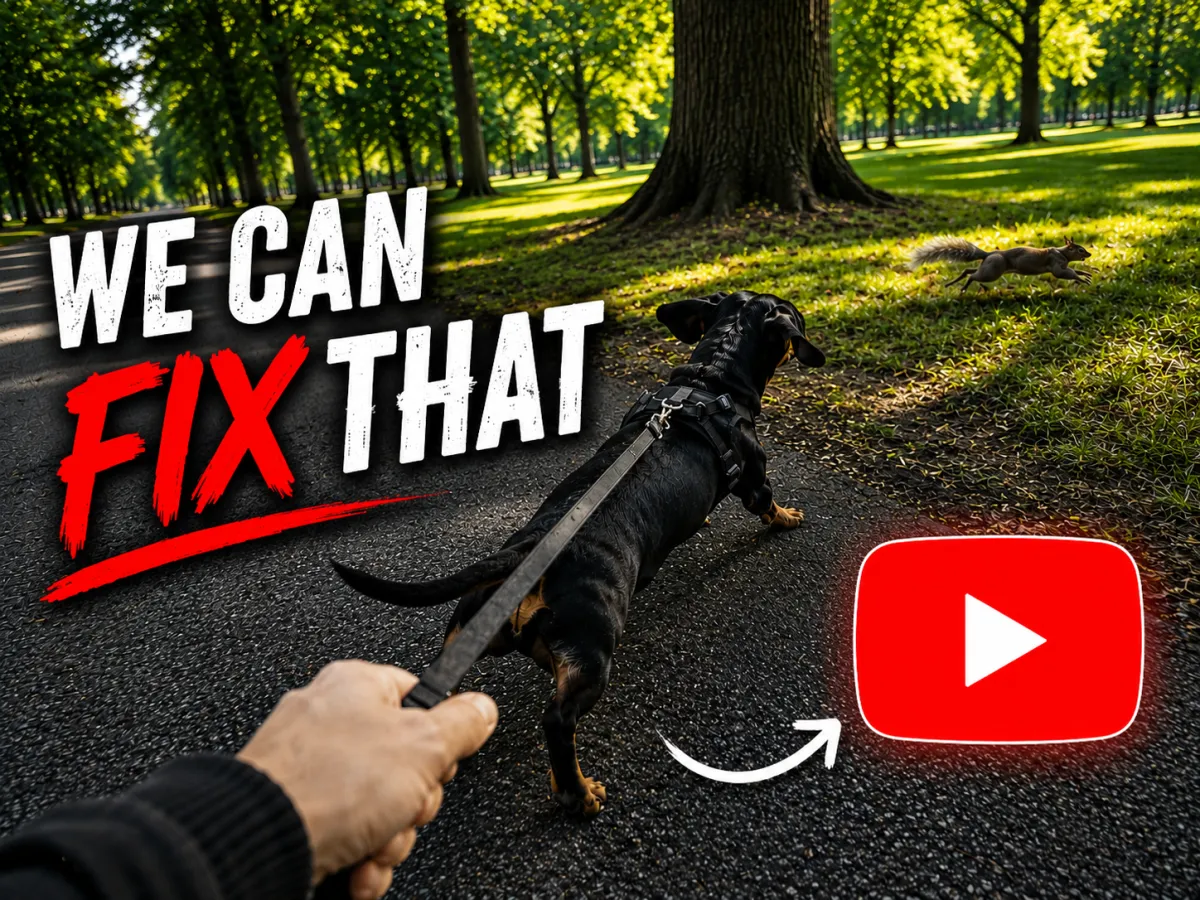
DOES YOUR DOG GO CRAZY WHEN THEY SEE A SQUIRREL?
DOES YOUR DOG GO CRAZY WHEN THEY SEE A SQUIRREL?
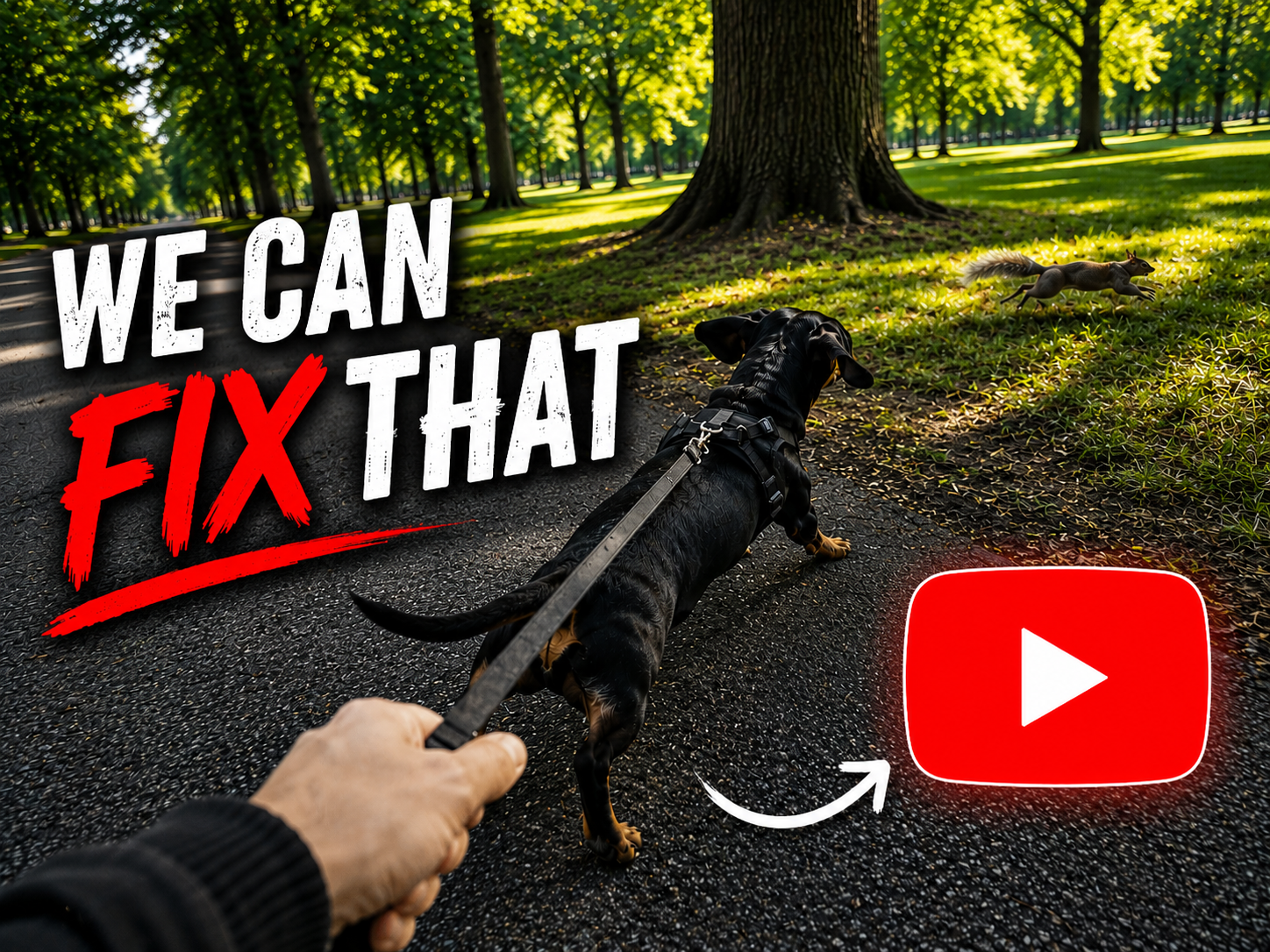
THE PROBLEM
Around Boston, squirrel chasing is one of the most common problems we see.
It usually starts small.
Your dog notices a squirrel.
Then they stare.
Then they bark.
Then they lunge.
Before long, every walk becomes a battle.
Many owners find themselves avoiding certain parks, certain streets, and even certain times of day because they know exactly what's going to happen when a squirrel appears.
The truth is that most dogs have some level of hunting instinct. Dogs share many of the same hunting patterns found in wolves. Some breeds show these instincts more strongly than others, but almost every dog has them.
For some dogs, a squirrel isn't just something interesting.
It's the most exciting thing they see all day.
WHY IT GETS WORSE
Squirrel chasing rarely fixes itself.
The more a dog practices a behavior, the stronger that behavior becomes.
What starts as simple curiosity often turns into obsession.
Looking becomes barking.
Barking becomes stalking.
Stalking becomes chasing.
And chasing becomes the highlight of your dog's day.
The danger is that squirrels are unpredictable.
They can appear when you're not paying attention.
A dog can pull you off balance, break free from the leash, run into traffic, or completely ignore every command you've taught them.
That's why the best time to address squirrel chasing is before it becomes a bigger problem.
WHAT MOST OWNERS NEVER REALIZE
Most owners focus on the squirrel.
But the squirrel is usually not the real problem.
The squirrel is simply giving the dog an opportunity to satisfy an instinct.
Many dogs spend most of the day indoors.
Then they go outside and finally get a chance to chase, pursue, and engage with something exciting.
The squirrel just happens to be available.
Take away one squirrel and many dogs will simply look for another outlet.
A rabbit.
A bird.
A moving object.
The target changes.
The instinct stays the same.
WHY MOTIVATION MATTERS
To solve squirrel chasing, we have to understand motivation.
Your dog is not chasing squirrels because they are trying to be difficult.
They're chasing because they find it rewarding.
The excitement.
The movement.
The chase itself.
That's the motivation.
Many owners try to compete with that motivation using treats, toys, or verbal commands.
Sometimes it works.
Often it doesn't.
Why?
Because the reward of chasing is simply stronger.
For behavior to change, we must match the dog's motivation and change the outcome.
The dog needs better outlets for those instincts, but they also need to learn that chasing wildlife no longer pays off.
When the cost of chasing becomes greater than the reward, and the dog has better ways to satisfy those instincts, the behavior begins to disappear.
That's when real change happens.
WHAT USUALLY DOESN'T WORK
Treats Alone
Many owners try to solve squirrel chasing with treats.
The problem is that when a squirrel suddenly runs across the path, the excitement of the chase is often far more valuable than a piece of food.
That's why many dogs completely ignore treats when they see a squirrel.
Management
Avoiding squirrels is not a long-term solution.
You can avoid certain parks or cross the street when you see a squirrel, but squirrels are everywhere.
Eventually, you'll run into one when you least expect it.
Trying To Tire The Dog Out
Many owners believe a longer walk will solve the problem.
But a tired dog can still chase a squirrel.
In fact, many dogs will ignore commands, toys, and food the moment a squirrel appears, no matter how much exercise they've had.
The problem is usually motivation, not energy.
Distance Training Alone
It's relatively easy to get a dog's attention when the squirrel is 100 feet away.
The real test happens when the squirrel suddenly appears 5 feet in front of the dog and starts running.
That's the situation most owners struggle with.
The goal is not to have a dog that listens only when the distraction is far away.
The goal is to have a dog that can make good decisions when the temptation is right in front of them.
Hoping It Goes Away
Squirrel chasing rarely fixes itself.
The more a dog practices the behavior, the stronger that behavior becomes.
What starts as staring often becomes barking.
Barking becomes stalking.
Stalking becomes chasing.
And chasing becomes the highlight of the dog's day.
WHAT ACTUALLY WORKS
Appropriate Outlets
Dogs need an appropriate outlet for their instincts.
That's why structured games like fetch, tug, flirt pole work, and other forms of play can be so valuable.
They allow dogs to chase, catch, and engage in a productive way instead of looking for squirrels to satisfy those instincts.
Matching Motivation
To change behavior, we have to understand motivation.
A squirrel is exciting.
For many dogs, it's more exciting than food, praise, or a toy.
That's why successful training must match the dog's level of motivation instead of pretending it doesn't exist.
Changing The Outcome
Dogs continue behaviors that work for them.
If chasing squirrels continues to be rewarding, the behavior usually gets stronger.
For real change to happen, the dog must learn that chasing wildlife no longer leads to the outcome they expect.
Clear Communication
Dogs learn faster when the rules are clear.
The goal is not to confuse the dog or constantly manage them.
The goal is to clearly communicate which choices lead to success and which choices do not.
When dogs understand the rules and have better outlets for their instincts, they become calmer, more focused, and easier to walk around distractions.
ASK FOR PROOF
One of the biggest problems in dog training is that many trainers make claims but rarely show real results.
If someone tells you they know how to solve squirrel chasing, ask them a simple question:
"Can you show me a dog that used to chase squirrels and doesn't anymore?"
Not a dog sitting in a training building.
Not a dog working 100 feet away from the distraction.
Not a dog being distracted with treats while the squirrel is barely visible.
A real dog.
A real squirrel.
A real walk.
The video below shows exactly that.
A dog that used to chase squirrels and no longer does.
And the most impressive part?
The transformation happened after just one training session.
Watch the video and decide for yourself.
READY TO ENJOY WALKS AGAIN?
If your dog is chasing squirrels, barking, pulling you down the street, and completely ignoring you when wildlife appears, you're not alone.
For many owners, every walk starts to feel like a battle.
You constantly scan for squirrels.
You worry about getting pulled off balance.
You avoid certain parks, trails, and routes.
And instead of enjoying your dog, you're stuck managing problems.
The good news is that it doesn't have to stay that way.
Watch the video above and see what's possible.
If you're ready to stop fighting with your dog and start enjoying your walks again, we can help.
Call us today and we'll show you exactly how to build a calmer, more focused dog around squirrels and other distractions.
📞 857-260-9537
If squirrel chasing is becoming a bigger problem every month, this program may be the best decision you can make for both you and your dog.