
I Keep Seeing the Same Problem in Dogs With Behavior Issues
Before We Fix the Behavior, We Need to Fix the Dog’s Life

The more dogs I work with, the more I notice the same pattern.
The behavior problems may look completely different.
One dog is barking and lunging at other dogs. Another is jumping on everyone who walks through the door. Another is destroying things at home, licking the floor constantly, struggling with separation, or afraid of everything around them.
But when I go through an evaluation and look at how these dogs actually live, I often find many of the same things missing.
They don't get enough real exercise.
Nobody regularly plays meaningful games with them.
They don't get enough opportunities to explore the world.
They don't have a consistent sleep schedule or uninterrupted rest.
They rarely experience freedom in nature.
And sometimes, even their diet could be better.
That's why I've started looking at these basic needs before jumping straight into behavior modification.
Because before we ask a dog to change, I think we should first ask:
Are we giving this dog a lifestyle that supports change?
Imagine Two People With the Same Problem
Let's imagine two people who are both struggling with anxiety or depression.
They have similar problems and start in roughly the same place.
The first person continues living exactly as before.
The second person starts changing different parts of their life.
I'm not saying lifestyle changes alone cure anxiety or depression. I'm using this comparison to make a simple point about the conditions we create around someone who is already struggling.
Which person would you expect to be in a better position to improve?
Now let's make those changes one at a time.
1. Better Food
Imagine both people have been living on fast food, frozen meals, sweets, and highly processed foods.
One changes nothing.
The other starts eating better-quality food—fish, meat, vegetables, soups, and balanced meals.
Which person would you expect to feel better physically and have better energy to work on everything else?
I look at dogs the same way.
Food isn't going to magically stop your dog from barking at another dog. But if I'm trying to help a dog physically and mentally, nutrition is one of the first parts of their lifestyle I want to look at.
Sometimes that means improving the kibble they're already eating. Some owners may choose other feeding options.
The point is simple:
If we're asking the body and brain to perform better, let's start by taking care of the body.
2. Better Sleep
Now our first person is eating better.
But let's add another change.
They start sleeping properly. They go to bed at a reasonable time and get enough uninterrupted rest. Maybe they even take an afternoon nap when they need it.
The other person continues sleeping poorly and never feels completely rested.
Who is in a better position now?
I see dogs that seemingly never completely switch off.
They're sleeping on the couch, but every sound wakes them up.
Someone walks past the window—they're up.
A person moves through the house—they're up.
A sound comes from the hallway—they're up.
They're technically sleeping, but they're always half-alert.
That's why I often work with clients on creating real, uninterrupted rest. Depending on the dog and household, that may involve crate training or having the dog sleep in a quiet separate area for a couple of hours during the day.
Dogs need sleep, not just opportunities to lie down.
3. Give the Brain Something to Do
Let's go back to our two people.
The person who improved their diet and sleep now finds a hobby.
Maybe they start learning how to design sculptures. Maybe they start collecting rocks and studying them. The exact hobby doesn't matter.
What matters is that they have something interesting that challenges their brain, develops skills, and gives them something meaningful to focus on.
The other person changes nothing.
Who would you expect to make better progress?
Dogs need this too.
They need opportunities to use their brains, instincts, and skills.
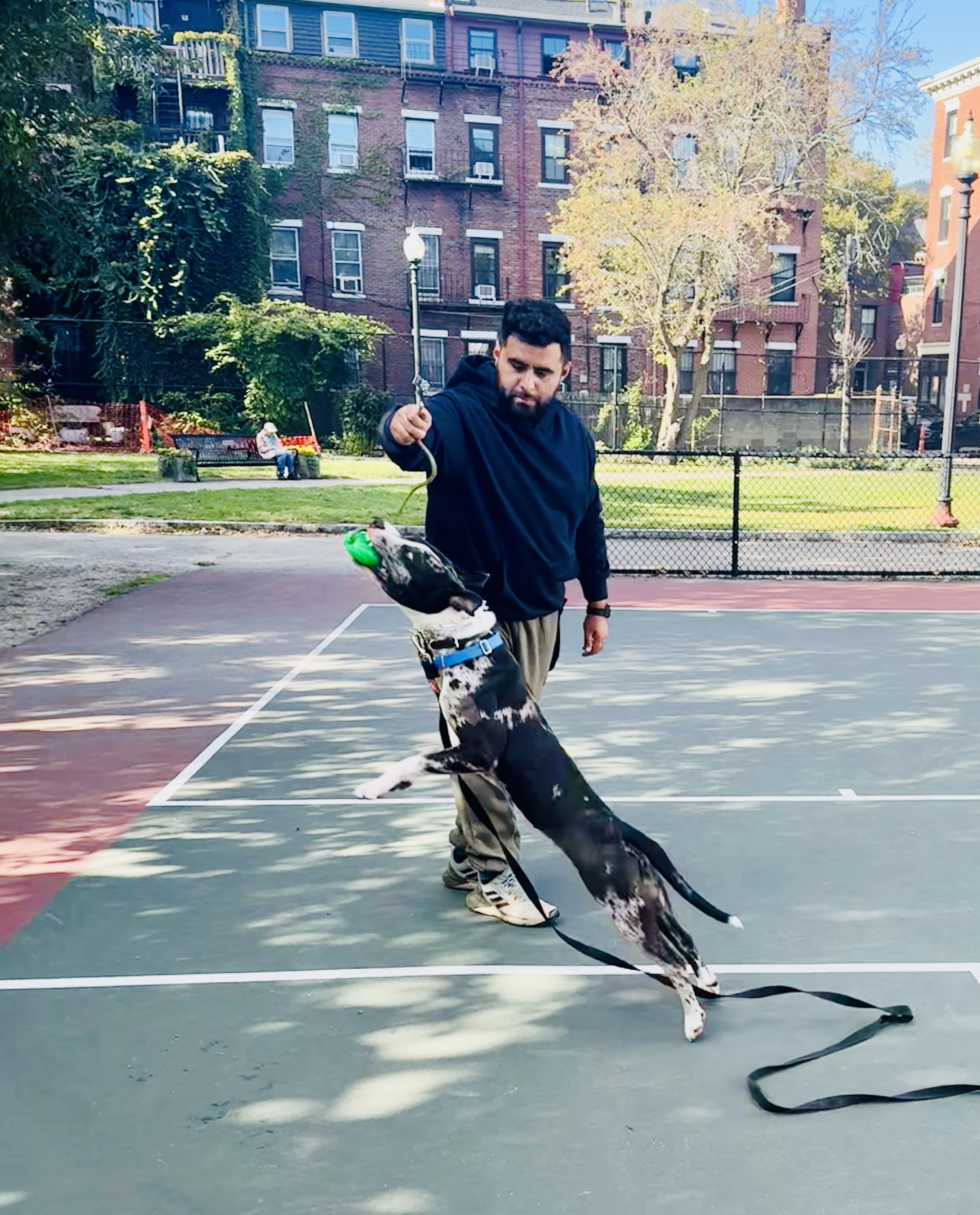
For many dogs, I use games that involve chasing, catching, possessing, searching, fetching, or playing tug.
The dog isn't simply moving their body.
They're thinking.
They're solving problems.
They're using natural abilities.
They're doing something with you that has meaning to them.
A food puzzle may keep a dog occupied for a while. That's not necessarily the same thing as actively using their body, brain, instincts, and relationship with you through play.
4. Real Exercise
Now let's send our first person to the gym.
They start running on the treadmill, lifting weights, or doing another form of regular physical exercise.
Our second person stays home.
Which one would you expect to be in a better position to improve?
Dogs need real physical exercise too.
And for many dogs, walking around the neighborhood for 30 minutes isn't much exercise.
Exercise means getting the body working.
Depending on the dog, that might mean running, playing, hiking, swimming, working on a treadmill, or going somewhere the dog has room to move on a longer leash.
I like taking dogs to fields, trails, parks, beaches, and other places where they can move back and forth, sniff, explore, and actually get tired.
A neighborhood walk can absolutely be part of a dog's life.
It just shouldn't automatically be confused with meaningful physical exercise.
5. Freedom in Nature
Now imagine our two people again.
One spends almost all of their life inside the same room.
The other can go to the beach, hike through the woods, feel the sun, breathe fresh air, and decide whether they want to walk left or right.
They experience the world.
Which life would you choose?
Dogs spend an incredible amount of their lives being controlled.
Don't go there.
Don't sniff that.
Stay next to me.
Stop pulling.
Come inside.
Sit here.
Wait there.
There are obviously times when dogs need structure and control. But I also believe dogs need opportunities to experience freedom.
That may eventually mean safe off-leash time for a properly trained dog. Before that, a long line or Flexi leash can give a dog much more opportunity to move, sniff, explore, and make choices while the owner still maintains control.
Let them experience grass.
Trees.
Water.
Different smells.
Trails.
The beach.
The woods.
Let them run when it's safe to run.
Let them occasionally decide where they want to go.
Freedom isn't the opposite of training. Freedom is one of the reasons we train.
6. And Finally, Love
Our first person is now eating better, sleeping better, exercising, enjoying hobbies, spending time outside, and experiencing more freedom.
But there is one more thing.
They have people around them who genuinely care about their well-being and help them build that better life.
The second person hears, "I love you," but nobody actually helps them change anything.
Which one is experiencing more love?
I think we sometimes misunderstand what loving a dog means.
Of course affection matters. Hug your dog. Pet your dog. Let them sleep next to you if that's what you enjoy.
But love is also work.
Love is learning what your dog needs.
Love is giving them better food when you can.
Love is teaching them how to rest.
Love is playing with them.
Love is getting off the couch and exercising them.
Love is taking them hiking.
Love is going to the beach.
Love is teaching them the skills they need so they can safely experience more freedom.
Putting kibble in a puzzle toy and hugging your dog every night may be part of loving them.
But it isn't the whole job.
Before I Start Trying to “Fix” the Dog
This is why more and more of my behavior modification programs begin with the same questions.
How is this dog eating?
How is this dog sleeping?
How does this dog play?
How much real exercise does this dog get?
How much of the world does this dog experience?
How much freedom does this dog have?
Because if a dog is frustrated, exhausted, under-stimulated, physically under-exercised, and spending almost their entire life inside a house and on a short leash, I don't want to ignore all of that and focus only on the barking.
Behavior training still matters. Some dogs need specific training for specific problems.
But I want to build the best possible foundation first.
Your Dog's Behavior Is Only Part of the Story
Maybe you're dealing with barking.
Maybe it's lunging.
Maybe your dog destroys the house, can't settle down, is afraid of everything, struggles when left alone, or simply seems impossible to live with.
That's the external problem you see.
The internal problem is what it's doing to you: you're frustrated, worried, tired, and wondering why nothing you've tried seems to last.
And underneath both is something I strongly believe:
You should be able to enjoy your dog—and your dog should have a life worth enjoying.
That's where I come in.
At Makes Sense Dog Training, I don't want to look only at the behavior happening in front of us. I want to look at the dog's life and help you build a realistic plan for your dog and your family.
If we work together, we'll look at the foundation first—food, sleep, play, exercise, freedom, and your relationship—and then address the specific behavior that brought you to me.
Because without changing what's contributing to the problem, you may spend another year managing the same barking, pulling, destruction, fear, or frustration.
But with the right foundation and the right training, the goal is much bigger than stopping one unwanted behavior.
The goal is a dog who can experience more of life—and an owner who can finally enjoy that life with them.
Better life. Better behavior. Enjoy your dog.
If you're struggling with your dog's behavior and don't know where to start, contact us to set up your consultation. We'll evaluate what's happening, build a plan, and help you start moving toward a better life with your dog.