
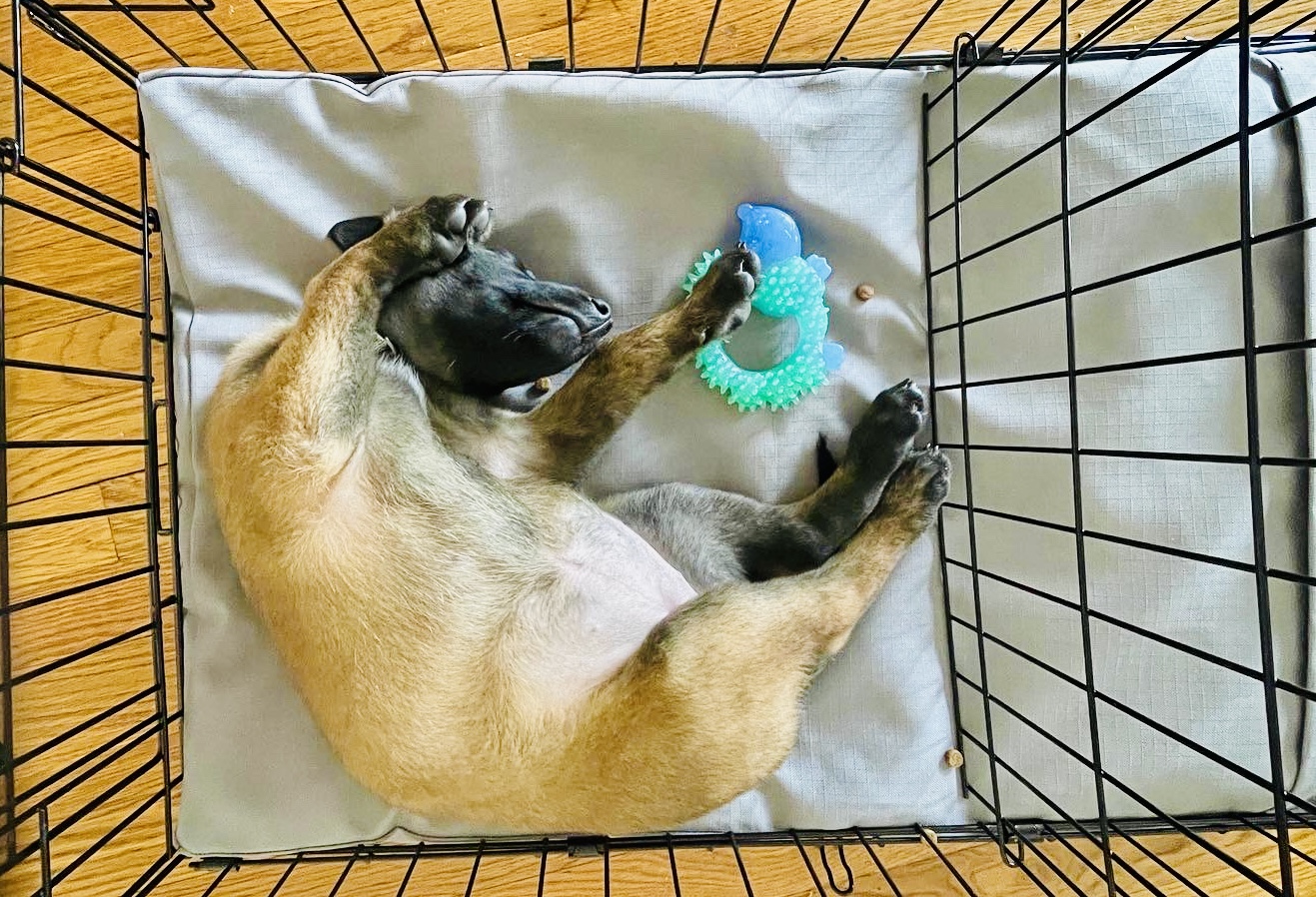
Why Crate Training Often Fails
Why Crate Training Often Fails — And Why It Is One of the Most Important Things You Can Teach Your Puppy
One of the most important things you can teach your puppy is crate training.
Good crate training helps:
potty training
separation anxiety prevention
puppy calmness
sleep schedule
house manners
your own mental health
But many puppy owners accidentally create more stress, more accidents, and more frustration because they do not understand what crate training is really supposed to teach.
Crate training is not just teaching your dog to “go inside a crate.”
Real crate training teaches your puppy:
how to relax
how to stay alone
how to rest
how to build routine
how to control impulses
how to feel calm inside the home
And when crate training is done correctly, it can prevent many future dog behavior problems before they even start.
1. Crate Training Helps Prevent Potty Training Problems
Many puppy owners start by placing potty pads around the apartment and rewarding the puppy with treats after pottying.
The problem is that puppies often learn much faster from patterns and smell than from treats.
Once puppies start having accidents around the home, those accident areas become familiar potty locations.
The puppy walks through the house, smells old urine, and instinctively wants to pee there again.
At that moment, the puppy is not thinking:
“Where is the potty pad?”
The puppy is following habit, smell, and instinct.
That is why many owners say:
“I give treats every time, but my puppy still pees on the carpet.”
Because potty training is not mainly about treats.
It is about:
supervision
routine
repetition
preventing accidents
building correct habits
Crate training helps because your puppy is not free to wander around making random mistakes when nobody is actively supervising.
You control the environment.
You control the routine.
And that helps you control where the puppy learns to potty.
Do your crate training and save your expensive carpets.
2. Crate Training Helps Build Bladder Control
Dogs naturally avoid peeing where they sleep.
When puppies stay calmly inside the crate for short periods, they slowly begin learning how to hold their bladder longer.
Sometimes:
5 minutes longer
10 minutes longer
20 minutes longer
Over time, bladder control becomes stronger and stronger.
Many puppies also begin learning how to communicate that they need to go outside instead of simply having accidents everywhere inside the home.
Without structure, many puppies never fully develop these patterns properly.
Do your crate training and make potty training easier for both you and your puppy.
3. Puppies Need More Sleep Than Most Owners Realize
Most puppies need around 15–18 hours of sleep every day.
Many owners accidentally create overtired puppies because the puppy stays active all day without enough rest.
Then owners become frustrated because the puppy:
bites nonstop
jumps constantly
cannot relax
becomes hyper
acts “crazy”
But many times, the puppy is simply exhausted and overstimulated.
Structured crate naps help puppies:
relax mentally
recover physically
calm their nervous system
build healthier routines
Play with your puppy.
Train your puppy.
Walk your puppy.
Then let your puppy rest.
That balance is extremely important during puppy development.
Do your crate training and help your puppy learn how to relax.
4. Crate Training Helps Prevent Separation Anxiety
Dogs are social animals.
Staying alone does not always come naturally to them.
If a puppy never learns how to calmly stay alone during puppyhood, many dogs later struggle when owners suddenly leave for work, school, or daily life.
This is one of the biggest reasons separation anxiety develops.
Good crate training helps puppies slowly understand:
being alone is safe
resting alone is normal
separation is temporary
calmness is part of daily life
Short crate naps during the day and sleeping separately at times can help puppies build independence early.
Without this training, some dogs become completely dependent on constant human presence.
Do your crate training and help prevent future separation anxiety problems.
5. Crate Training Helps Protect Your Mental Health Too
Raising a puppy is exhausting.
Many owners feel overwhelmed after months of:
accidents
biting
nonstop supervision
barking
destruction
lack of sleep
By 5 or 6 months old, many families are already frustrated, tired, and emotionally drained.
Some owners even begin regretting getting the puppy.
And sometimes these problems create stress inside the entire family.
Good crate training gives both you and your puppy healthy breaks throughout the day.
Instead of managing chaos nonstop for 16 hours, you create structure:
activity
training
play
potty
rest
That routine makes puppy raising much easier and much healthier for everyone.
Do your crate training and save your mental health.
Crate Training Is About Building Calmness, Structure, and Good Habits
Crate training is not punishment.
And it is not just about “putting the dog away.”
Good crate training helps puppies:
learn calmness
build routine
avoid accidents
prevent future problems
rest properly
develop independence
If you do not want:
destroyed carpets
ruined furniture
constant stress
separation anxiety
nonstop puppy chaos
start crate training early and do it correctly.
And if you do not know where to start, contact Makes Sense Dog Training. We can help you build a simple, clear crate training plan for your puppy and your home.