
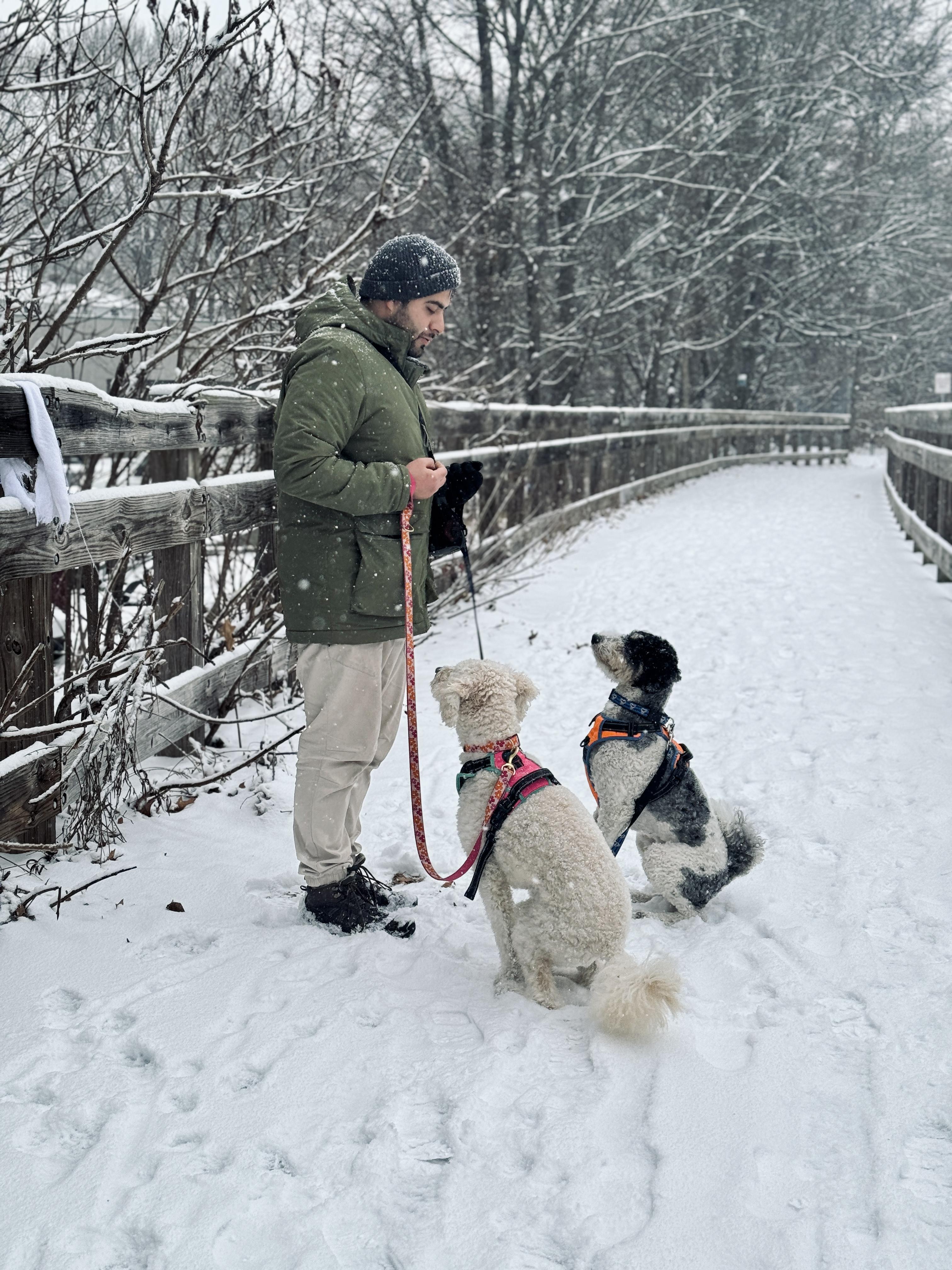
Why Treats Stop Working Outside: 5 Common Dog Training Problems
5 Common Dog Problems Treats Alone Usually Do Not Solve
Many dog owners are told that treats are the answer to almost every dog training problem.
At home, treats can work very well. Your dog is calm, there are fewer distractions, and food is often the most interesting thing in the environment.
But outside the house, real life becomes much more complicated.
Outside, your dog is not comparing your treat to “nothing.” Your dog is comparing your treat to the environment, instincts, excitement, fear, movement, and everything happening around them.
That is why many owners become frustrated when treats suddenly stop working in real-world situations.
Here are 5 common dog training problems where treats alone usually do not solve the real issue.
1. Chasing Rabbits, Squirrels, and Other Animals
If your dog sees a rabbit running across the yard, your dog is usually not thinking about your treat anymore.
The rabbit offers:
movement
chase
excitement
adrenaline
instinct
For many dogs, especially high-drive dogs, chasing is much more rewarding than food.
This is why many owners say:
“My dog listens perfectly until he sees a squirrel.”
The problem is not that your dog suddenly became stubborn.
The problem is that the environment became more rewarding than the treat.
2. Pulling Toward Other Dogs
This becomes very common with dogs that spend a lot of time at dog parks or daycare.
Many owners accidentally teach their dogs that other dogs are the most exciting thing in the world.
Other dogs offer:
play
running
chasing
social interaction
excitement
Then later, owners become frustrated when their dog pulls toward every dog on walks and completely ignores treats outside.
Your dog is not comparing your treat to “nothing.”
Your dog is comparing your treat to the possibility of running and playing with another dog.
And for many social dogs, the environment wins.
3. Fear and Reactivity
Many trainers use treats to help fearful or reactive dogs around triggers such as:
strangers
dogs
loud noises
traffic
Sometimes food can help when the dog is calm and far enough away from the trigger.
But once the dog crosses a certain threshold, survival becomes more important than food.
At that point, the dog is not thinking about treats anymore.
The dog is thinking about safety.
That is why many owners say:
“My dog takes treats at first, but once we get close, the treats stop working.”
The problem is not the food itself.
The problem is that fear is stronger than food motivation.
4. Potty Training
Many people believe puppies learn to potty outside mainly because they receive treats afterward.
Treats can still help, but potty training is usually much more about:
routine
supervision
timing
consistency
structure
Dogs naturally develop habits around location and repetition.
Puppies often learn to return to the same potty areas over and over again.
That is why simply giving treats after pottying outside usually does not solve potty training problems by itself.
Without consistency and structure inside the home, accidents usually continue.
5. Crate Training
One of the most common crate training mistakes is teaching dogs to constantly expect rewards while inside the crate.
Many trainers tell owners to:
give treats for going into the crate
return every few minutes with more treats
slowly increase time little by little
The problem is that this often creates anticipation instead of calmness.
Instead of teaching the dog to relax and sleep, the dog stays alert waiting for the next reward or for the owner to return.
Imagine getting paid randomly at work:
first on time
then late
then earlier
then after waiting longer
You would not feel calm.
You would keep waiting and thinking about when the next payment is coming.
That is what many dogs start doing in the crate.
They stay mentally alert instead of learning how to fully relax.
Real crate training is not just about giving treats.
It is about teaching the dog how to settle down calmly, relax, and feel comfortable being alone without constantly expecting stimulation.
Real-World Dog Training Requires More Than Food
Treats can absolutely be useful in dog training.
But real-world dog training also requires:
structure
communication
consistency
boundaries
practice in real environments
Because outside the house, your dog is competing against the entire world around them.
If your dog ignores treats outside, pulls toward dogs, struggles with reactivity, crate training, or potty training, you are not alone.
These problems are very common, and they can be fixed with the right training approach.
You do not have to keep fighting for your dog’s attention outside. We can help you build calm, reliable behavior in the real world.
If you need help with real-world dog training in Boston, contact Makes Sense Dog Training and we will help you build calm, reliable behavior in everyday life.