
Why I Use a Flexi Leash for My Puppy and in Dog Training
Why I Use a Flexi Leash for My Puppy and in Dog Training
Why I Use a Flexi Leash for My Puppy and in Dog Training
A lot of dog owners struggle with leash walking. Their dog pulls constantly, the owner spends the entire walk trying to hold the dog back, and something that should be enjoyable becomes frustrating for both of them.
But before we try to fix leash pulling, I think we need to understand why dogs pull in the first place.
For many dogs, especially dogs living in cities and apartments, going outside may be their best opportunity of the day to actually be a dog. They spend hours inside the house following our rules, and then they finally get 30 or 40 minutes outside. During that short period, they want to sniff, track smells, pee, explore, move, and discover what's happening around them.
They also learn their routine very quickly. They know the usual route, they know where you're going, and they know that eventually the walk ends and they're going back home. So naturally, they want to get as much as possible out of that limited time.
Meanwhile, at the other end of a short leash is a person trying to slow them down, keep them moving, or prevent them from reaching everything they're interested in. That's where a lot of the conflict starts.
Leash pulling is a problem for us because it makes walking uncomfortable and difficult. But for the dog, pulling may simply be the way they've learned to reach the things they want to experience.
You can see the same thing with dogs who regularly go to a dog park. They recognize where they're going and start pulling their owner toward it because they don't want to waste their limited time walking nicely when the place they really want to reach is right there.
Once we understand that, leash pulling becomes much easier to understand.
Sometimes We Teach Dogs to Pull More
Another problem with short leashes is what happens when we're constantly holding the dog back. Dogs have an opposition reflex, so when you pull them backward, they naturally want to pull forward. The more resistance they feel, the more they can push against it.
We actually use a similar idea when we're trying to build motivation for games like tug or fetch. We can put a harness on the dog, hold them back from the toy, and prevent them from immediately reaching it. As the dog tries harder to get to the toy, their motivation increases. Then we release them and allow them to get it.
Now think about what many owners unintentionally do on every walk. Their dog sees something interesting and starts moving toward it, so the owner tightens the leash and holds the dog back. The dog tries harder to reach it, and the owner holds them back even more. Instead of reducing the dog's desire to get there, we may actually be increasing the dog's motivation and frustration.
In other words, while we're trying to stop leash pulling, we may unintentionally be practicing it every single day.
What Happens When the Thing Your Dog Wants Is Another Dog?
This becomes even more important when we're talking about dogs who love other dogs.
A young puppy may see another dog and immediately want to run over and meet them. The puppy pulls forward, but the short leash prevents them from getting there. As puppies get older—nine months, ten months, twelve months—they become bigger and stronger, but that desire to reach other dogs may still be there.
Now you may start seeing barking along with the pulling.
You can also see the same frustration when two dogs actually meet on leash. Both dogs may be friendly and interested in each other, but as they approach, both owners shorten their leashes because they don't want to lose control. The dogs finally reach each other while both leashes are still tight, and they're pulling and choking themselves trying to interact.
That extra tension and frustration can sometimes turn into redirected reactivity between the dogs.
Something that started with a friendly puppy simply wanting to reach another dog can become a much more difficult leash problem later.
When Does Your Dog Actually Get to Be a Dog?
This is one of the biggest reasons I think differently about walks.
At home, we ask dogs to live according to human rules. We don't want them barking, chewing our furniture, digging, chasing things, or doing whatever else they may naturally want to do.
That's understandable. They live in our homes, and there have to be rules.
But then we take them outside and continue asking them not to do anything like a dog. We want them walking next to us. We don't want them pulling, chasing, digging, barking, or constantly stopping to explore.
So when do they actually get to be dogs?
This can be especially difficult for city dogs. Many of them rarely have an opportunity to truly run and explore. For some, the closest thing they get to freedom is going to a dog park, and I don't consider dog parks a good solution for giving dogs freedom.
That's why I often tell my clients that the more appropriate freedom you give your dog, the fewer behavior problems you may see.
And I think that mindset should start when the dog is still a puppy.
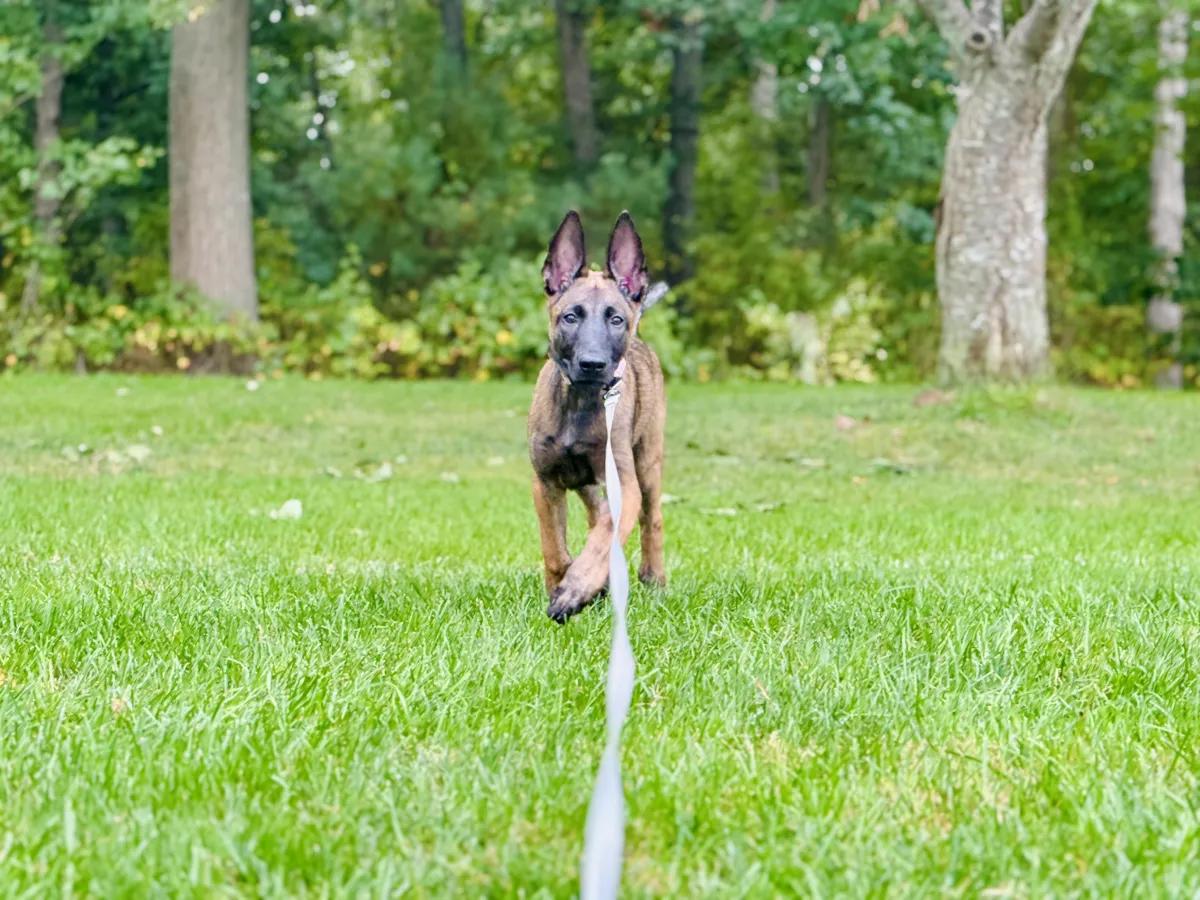
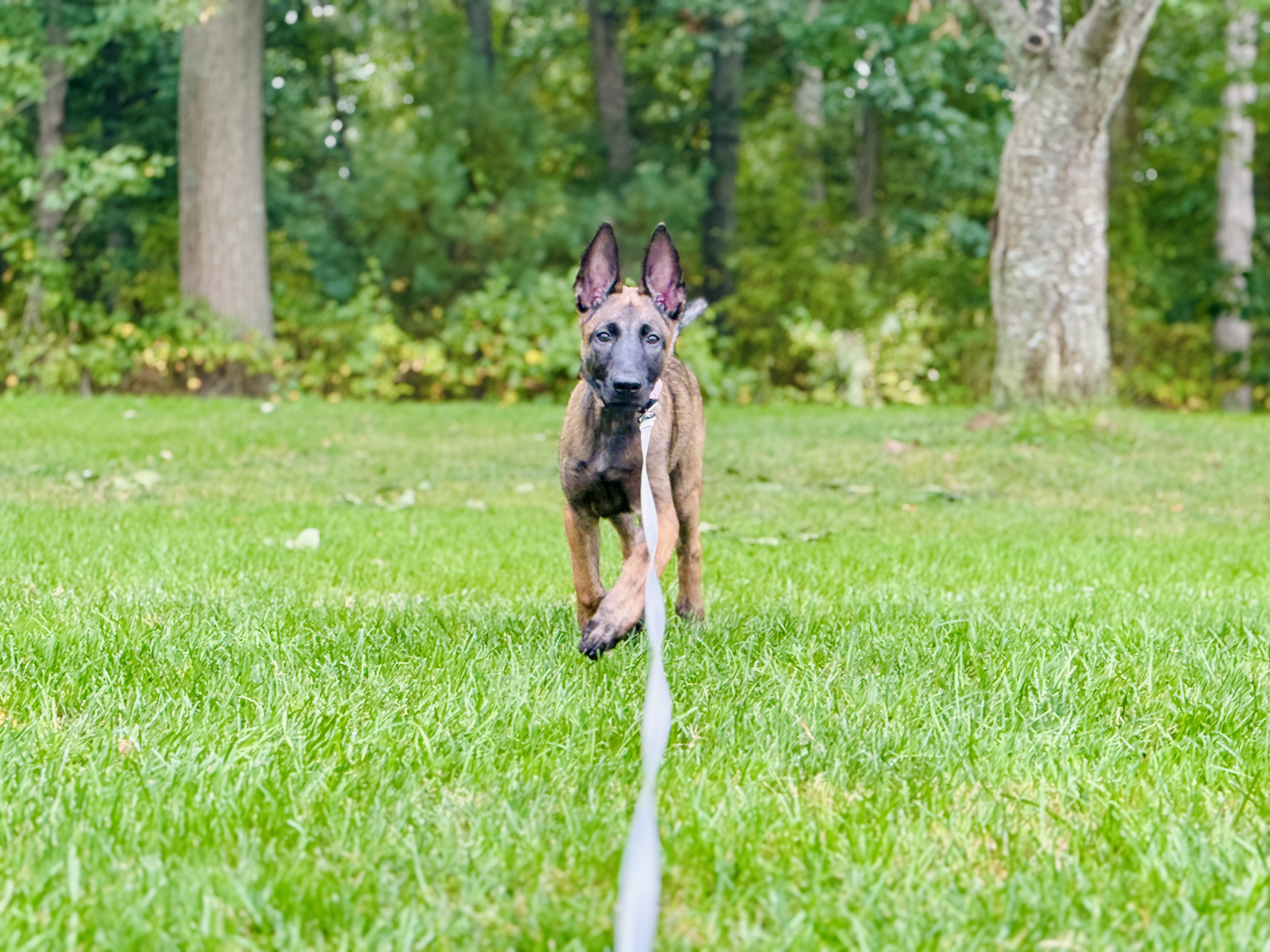
Why I Use a Flexi Leash With My Puppy
I want my puppy to explore the world. I want her to sniff, move around, see things, and experience freedom.
I don't need every puppy walk to be a leash-walking lesson.
When puppies first experience more freedom, they may be extremely excited. They may want to explore everything around them, and that's okay. But when that freedom becomes a normal part of their life, you may start noticing that the urgency begins to change.
After the first couple of weeks, the dog may start spending more time walking closer to you. They can move away when they find something interesting, sniff and explore it, and then come back and join your walk again.
They don't have to spend the entire walk desperately trying to reach everything because exploring is no longer something they're constantly being prevented from doing.
That's also why I believe giving dogs more freedom can help us build a closer relationship with them. Instead of spending every walk fighting against each other, we can actually enjoy the walk together.
Freedom Doesn't Mean a Lack of Control
Of course, I'm not recommending that everyone simply buy a retractable leash, give their dog 30 feet of line, and let the dog do whatever they want.
More freedom also requires control.
It's important to teach your dog boundaries and communication. I want my dog to understand yes and no. I want recall, heel, and other obedience commands so I can control my dog whether they're three feet away from me or thirty feet away from me.
For me, that's the goal. I don't want to choose between freedom and control. I want both.
I want my dog to have opportunities to sniff, explore, move, and experience the world, while also knowing that when I need my dog back next to me, I can bring them back.
That's why a Flexi leash is more than just a longer leash for me. It's a tool that allows me to give my dog more freedom while still maintaining control.
Your Walk Doesn't Have to Be a Fight
If your dog pulls throughout the entire walk and you're constantly fighting to hold them back, it may be worth looking at the problem from a different perspective.
Instead of only asking, “How do I stop my dog from pulling?” we can also ask, “Why does my dog feel such a strong need to pull?”
How much freedom does your dog actually have? How much opportunity do they have to sniff and explore? How often do they get to move naturally and experience the world without constantly being held back?
Giving your dog more freedom doesn't mean giving up rules or control. The goal is to build both: a dog who can explore, sniff, move, and enjoy life while still understanding boundaries, and an owner who can enjoy walking their dog instead of fighting them through every walk.
If you want to learn how to give your dog more freedom with a Flexi or longer leash while also building boundaries, recall, heel, and obedience, contact Makes Sense Dog Training to set up your consultation.
We'll help you build a plan that allows your dog to enjoy more freedom while helping you stop worrying about your dog and start enjoying your walks together.